What Makes Timegated® Raman Different from Traditional Raman Spectroscopy?
Raman spectroscopy is one of the most powerful techniques for identifying materials because most molecules produce a unique Raman spectrum; a molecular fingerprint that reveals its chemical structure.
In ideal conditions, conventional Raman spectroscopy provides excellent analytical results. However, many real-world samples and measurement conditions are far from ideal. Fluorescence, high temperatures, ambient light, and rapidly changing processes can make it difficult to obtain a clear Raman signal.
Timegated® Raman spectroscopy was developed to overcome many of these challenges. By capturing the Raman signal before unwanted fluorescence light reaches the detector, it enables accurate molecular analysis where conventional Raman often reaches its limits.
Every material has its own molecular fingerprint
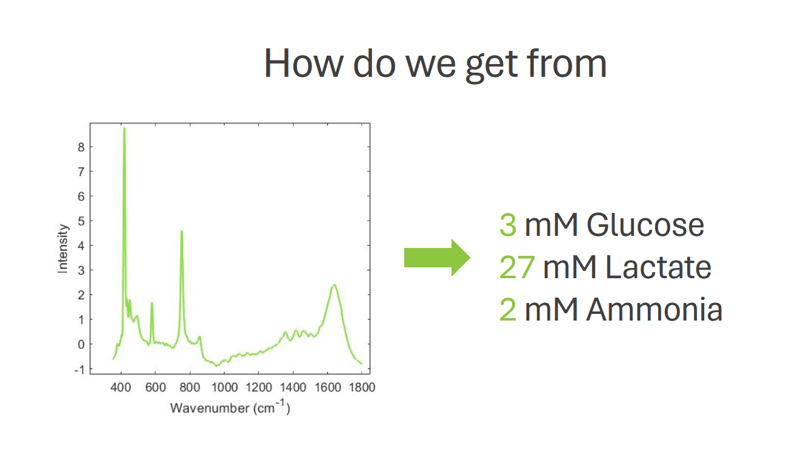
When materials interact with laser light, a small part of the light is scattered as Raman photons creating a Raman spectrum that acts like a molecular fingerprint. This fingerprint allows researchers and manufacturers to identify materials, verify product quality, monitor reactions, and understand changes occurring during a process. The Raman spectrum can be used to identify which substances are present and how much of the substances are present.
The clearer the Raman spectrum, the more reliable the analysis. But in many applications, the fingerprint can be hidden by interfering signals.
Challenge 1: Fluorescence masks the Raman signal
One of the biggest limitations of conventional Raman spectroscopy is fluorescence.
Many materials including pharmaceuticals, biological samples, polymers, pigments, minerals, and natural products—emit fluorescence when illuminated by a laser. This fluorescence may even be thousands of times stronger than the Raman signal itself, completely masking the molecular fingerprint.
Users may try changing the laser wavelength or modifying sample preparation to reduce fluorescence. However, these approaches often cannot eliminate the problem: when fluorescence overwhelms the Raman signal, obtaining a reliable measurement result may remain impossible.
Timegated® Raman solves this challenge differently.
Because Raman scattering occurs almost instantaneously while fluorescence is usually much slower, Timegated® Raman separates the two signals in time. It captures the early photons carrying the Raman signal while minimizing the contribution of delayed fluorescence, resulting in a much clearer Raman spectrum without extensive sample preparation or complicated workarounds. At the same time, the fluorescence signal can be captured separately, providing additional information when it is useful for the application.
Because Raman scattering occurs almost instantaneously while fluorescence is usually much slower, Timegated® Raman makes use of only the early Raman photons and rejects most of the delayed fluorescence. The result is a much clearer Raman spectrum without extensive sample preparation or complicated workarounds.
Challenge 2: Measuring high temperature samples
Measuring high-temperature samples
High-temperature processes present another challenge for conventional Raman spectroscopy.
As temperature increases, materials emit thermal radiation that creates a strong continuous optical background, making Raman spectra increasingly difficult to interpret.
Timegated® Raman reduces the influence of thermal emission by using a high-repetition-rate pulsed laser and time-gated detection. Raman signals are collected within short detection windows synchronized with the laser pulses, while the detector remains inactiv
Challenge 3: Reliable measurements under ambient light
Traditional Raman measurements are often performed in carefully controlled laboratory conditions to minimize interference from surrounding light.
In industrial and many other real-world environments, highly controlled dark measurement conditions are rarely practical.
Timegated® Raman significantly reduces the impact of ambient light, allowing measurements in normal lighting conditions. This simplifies process integration, enables more flexible installation, and supports measurements directly where the process is taking place.
Traditional Raman vs. Timegated® Raman
|
Measurement challenge |
Traditional Raman |
Timegated® Raman |
|
Fluorescent samples |
Raman signal may be obscured |
Fluorescence largely suppressed for clearer spectra |
|
Molecular fingerprint |
Can be hidden by background signals |
Clearer and more reliable molecular information |
|
|
|
|
|
High-temperature measurements |
Thermal emission can dominate the spectrum |
Thermal background significantly reduced |
|
|
|
|
|
Ambient light |
Often requires controlled lighting |
Operates effectively under ambient lighting conditions |
Seeing More Means Understanding More
The value of Raman spectroscopy lies in its ability to reveal the molecular fingerprint of a material. Timegated® Raman extends that capability to samples and environments where conventional Raman often struggles.
Whether analyzing fluorescent biological samples, monitoring industrial processes, studying battery materials, or optimizing mineral processing, Timegated® Raman provides researchers and manufacturers with clearer molecular insights helping them make faster, more confident decisions.
e for most of the time when the continuous thermal background is present. This significantly reduces the contribution of thermal emission and enables molecular measurements at temperatures where conventional Raman systems often struggle.
Applications include metallurgy, mineral processing, catalyst development, ceramics, advanced materials, and other high-temperature industrial processes.
Author
 This blog was written by Timegate Instruments’ Senior Application Specialist Bryan Heilala. Bryan is a young and energetic chemist with a degree in M.Sc. (chemistry) and experience and background in analytical chemistry. Read more about him and the whole Timegate team.