The challenge: Understanding mineral composition during processing
In mineral processing, timely information about material composition is essential for monitoring process performance and making informed operational decisions.
Traditional laboratory analysis can provide detailed mineralogical information, but collecting, preparing and analyzing samples may take time. For processes where mineral composition changes continuously, more frequent measurements can provide valuable additional insight.
Timegated® Raman spectroscopy offers a non-destructive approach to mineral analysis, providing information about mineral composition and crystal structure from solid materials, slurries and liquids.
Research conducted in Finland has demonstrated its potential for mineral processing applications, including lithium-bearing spodumene slurries and high-temperature mineral conversion.
The solution: Raman measurements for mineral process monitoring
Raman spectroscopy identifies materials through their characteristic molecular and crystal lattice vibrations.
By measuring the Raman spectra of process samples, it is possible to identify minerals and, with suitable calibration or analysis methods, estimate their concentrations.
Timegated® Raman spectroscopy also reduces fluorescence interference, which can otherwise make Raman analysis difficult for certain mineral samples.
Depending on the process and measurement configuration, Raman measurements can be performed using non-contact probes or probes suitable for liquids and slurries.
This creates opportunities for obtaining mineralogical information at different stages of mineral processing.
Application 1: Monitoring spodumene slurries in lithium processing
As part of the Keliber lithium project in Central Ostrobothnia, Finland, Timegated® Raman spectroscopy was investigated for monitoring mineral slurries. Initial measurements were performed on slurries containing approximately 13% solids.
Continuously collected Raman spectra provided information about spodumene and apatite concentrations, demonstrating the potential to monitor changes in mineral composition during processing.
From initial studies to pilot-scale monitoring
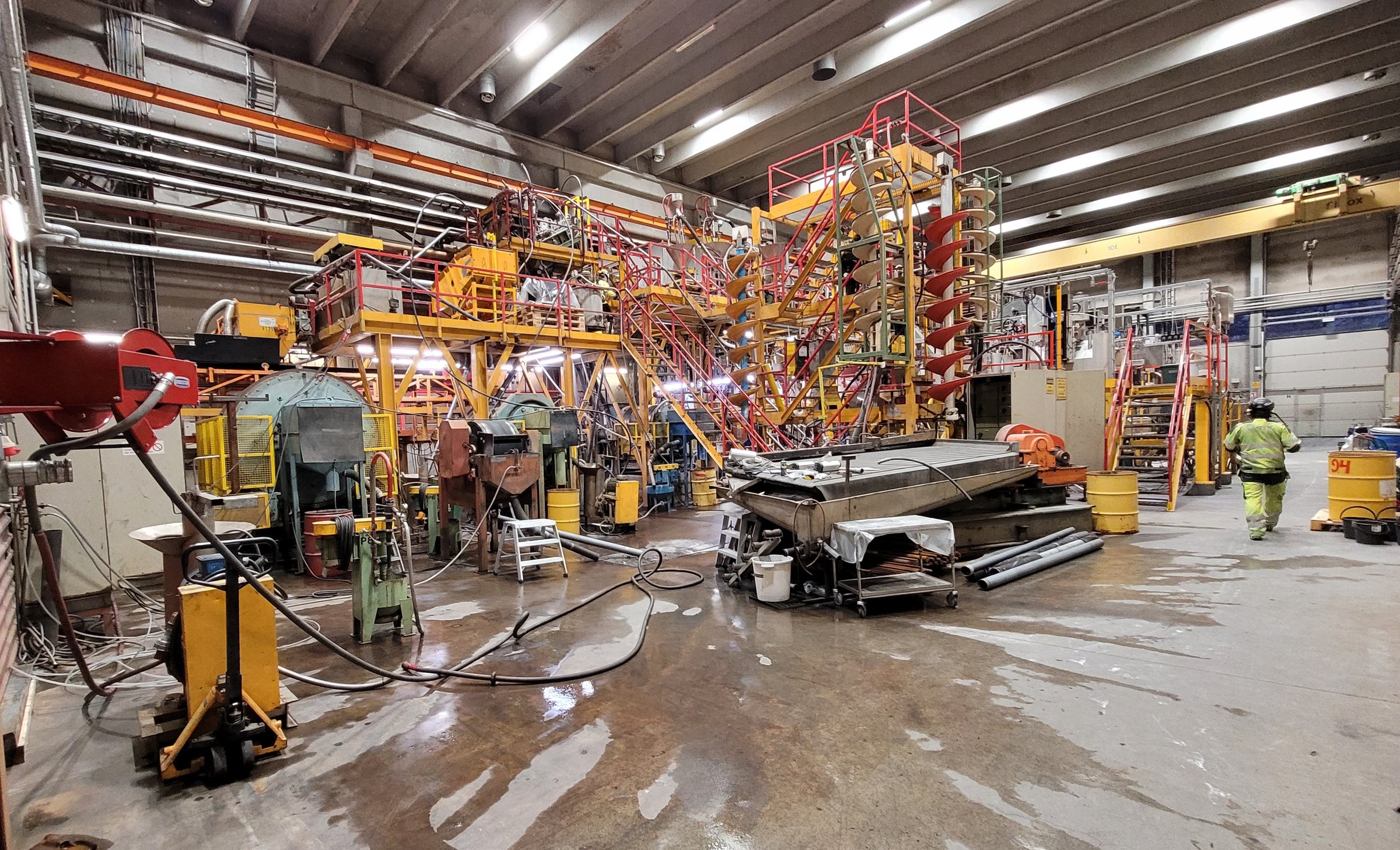
The technology was further evaluated during Keliber's pilot-scale mineral processing programme, involving GTK Mintec in Outokumpu, Finland.
During the programme, approximately 50 tonnes of ore were processed, producing 4 tonnes of spodumene concentrate.
Timegate's Raman analyser system was used to collect continuous measurements from three process streams: feed, concentrate and tailings.
Immersion probes installed in slurry mixing tanks were connected to the Raman spectrometers through optical fibres, enabling simultaneous measurements at different stages of the process.
The pilot demonstrated how Timegated® Raman spectroscopy could provide continuous mineralogical information in a realistic mineral processing environment.
Key finding: Timegated® Raman measurements provided continuous information about mineral composition from multiple process streams, demonstrating the potential for on-line mineralogical monitoring and more informed process control.
Read more about the pilot programme in our original Keliber project news article from 2022.
Application 2: Following spodumene conversion at high temperatures
Spodumene undergoes a structural transformation from α-spodumene to β-spodumene during high-temperature treatment.
This conversion is important because it makes the mineral more suitable for subsequent lithium extraction.
Timegated® Raman spectroscopy was used to investigate the conversion process by monitoring characteristic Raman signals associated with the different spodumene crystal structures.
The measurements demonstrated that changes in the relative intensities of α- and β-spodumene signals could be used to follow the progression of the conversion.
The technology was also evaluated during a later high-temperature conversion pilot conducted with FLSmidth. The pilot achieved an average conversion rate of 96.3%, while Raman measurements provided information about the mineral phase transformation.
Key finding: Raman spectroscopy distinguished spodumene crystal forms and provided information about their transformation during high-temperature treatment.
These results demonstrate the potential for Raman-based analysis to support the optimization of mineral conversion processes.
Application 3: Quantitative analysis of mineral process samples
Beyond lithium processing, Timegated® Raman spectroscopy was also investigated for quantitative mineral analysis using solid process samples from Mondo Minerals in Sotkamo, Finland.
The measurements were used to determine talc concentrations in mineral samples.
The Raman-based concentration results showed good agreement with conventional laboratory reference measurements.
Key finding: The results demonstrated the potential of Timegated® Raman spectroscopy to provide quantitative mineralogical information from industrial process samples.
What do these results mean for mineral processing?
Together, the application studies demonstrate several opportunities for Raman-based mineral analysis:
- More frequent process information: Continuous or repeated measurements can help follow changes in mineral composition.
- Mineral identification: Characteristic Raman signals can distinguish minerals and crystal structures.
- Quantitative analysis: Suitable calibration methods can enable mineral concentration measurements.
- Process optimization: Timely mineralogical information can support decisions about processing conditions.
- Multiple measurement points: Optical probes can enable monitoring at different stages of a mineral processing operation.
The appropriate measurement configuration depends on the material, process environment and required analytical performance.
Exploring new possibilities for mineral process monitoring
The studies demonstrate how Timegated® Raman spectroscopy can provide useful mineralogical information from challenging industrial samples.
From monitoring spodumene in mineral slurries to investigating high-temperature conversion and quantifying mineral concentrations, Raman analysis offers opportunities to complement conventional laboratory methods.
The Keliber pilot programme further demonstrates the potential to move beyond individual measurements towards continuous monitoring across multiple process streams.